Event Details
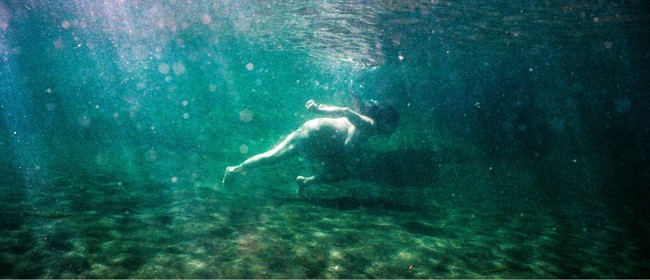
Currents Calling Home features Japanese artist Ai Iwane and Aotearoa-based research collective Mānawatia te Wai. Drawing together creative and community practices around the restoration of waterways in different parts of the world, the exhibition features artworks that document the enduring cycles of two creatures — native North American salmon and tuna (Aotearoa longfin eel). The journeys of both species invite us to reflect on what it means to return to relation, responsibility, and the web of more-than-human life to which we belong.
Ai Iwane's The Opening (2022–) was created along the Mattole River in Northern California, where the artist spent her high school years. Her drone footage and photographs follow both the people connected to the river and a dramatic annual event: each autumn, a sandbar blocking the river breaks open, reuniting it with the sea and allowing native salmon to swim upstream. Accompanying photographic work honours decades of community-led restoration that made this possible. Iwane extends her lens to the forests of Mount Hakkōda in Japan, where ephemeral snowmelt streams appear only in spring — a quieter echo of the Mattole's fleeting opening.
Te Taniwha began as a collaboration between photographic artist Joyce Campbell and historian Richard Niania in the Ruakituri and Mangapōike Valleys north of Wairoa. Drawing on pūrākau, local history, and ecology, the work follows tuna and the taniwha understood as their spiritual manifestation. Over time this collaboration has grown into Mānawatia te Wai — an interdisciplinary collective of artists, academics, rangatahi, and scientists working to restore awareness of wetland ecologies through intergenerational and Indigenous-led knowledge. This presentation includes a temporary thatched whare raupō, traditionally used for eeling, and a waerea (protective incantation) by Richard Niania — weaving craft, story, and ecological care into a living space.
In these works, memory and ecology are intertwined — beginning with the camera as a witness and a more-than-human lens spanning timescales, species, and ecosystems.